

The katana, the famous Japanese sword, is much more than a weapon for samurai. Used for centuries, it embodies profound values such as honor, discipline, and mastery. Its distinctive design, with a long, curved blade, was crafted to allow swift and precise strikes in combat. However, beyond its function as a war sword, the katana is also a spiritual symbol in Japanese culture.
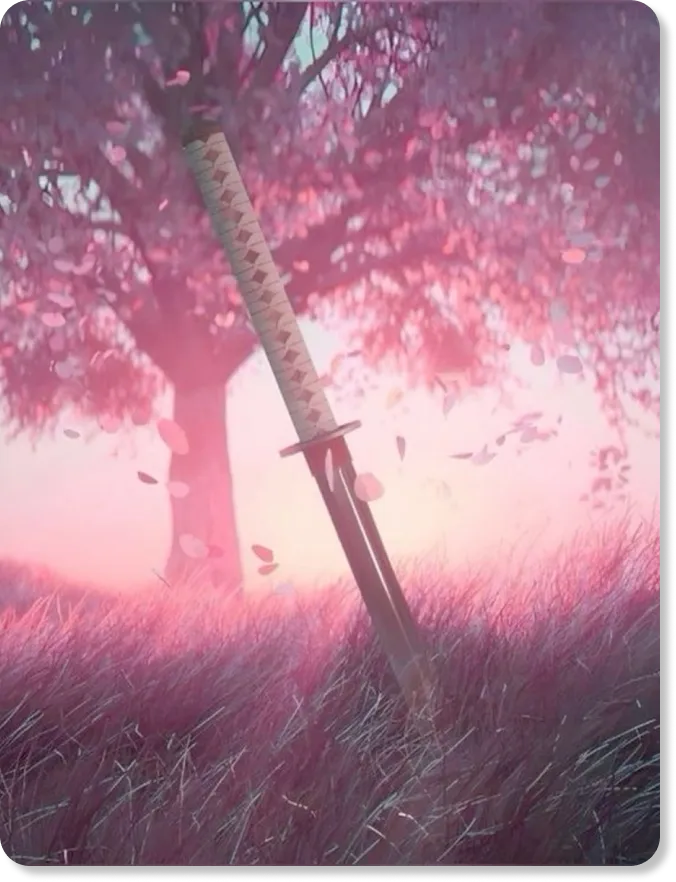
The forging process of a katana is complex and demanding. Each sword is made by folding and hammering steel multiple times, a method that makes the blade both highly durable and flexible. This meticulous crafting process turns each katana into a true work of art, combining aesthetics and performance. For samurai, the katana was not just a tool of war but an extension of their own soul. The weapon was wielded according to a strict moral code, the Bushido, which dictated that the use of the sword should be guided by principles of honor, loyalty, and justice.
Today, although the katana is no longer used in combat, it continues to hold a central place in popular culture. It is frequently depicted in films, video games, and literary works. Films like Kill Bill or games like Ghost of Tsushima highlight the katana as a symbol of power and discipline. Moreover, the katana is still practiced in martial arts like Iaido, a discipline that teaches the art of drawing and using the sword with precision...
The katana, much more than a weapon, is a timeless symbol that transcends ages. Its history and symbolism remain rooted in Japanese tradition, while continuing to inspire in modern contexts. It embodies the idea that balance between tradition and innovation can endure, even through the evolutions of time.