Published on 24/10 by Mathis Juillard. Reading time: 2 minutes
The Impact of the Katana in Modern Cinema
“Kill Bill: the katana, a symbol of justice and vengeance in legendary battles.”
The movie Kill Bill, directed by Quentin Tarantino, has made its mark on cinema for many reasons, and one of the most iconic elements is the use of the katana.
Released in two volumes (2003 and 2004), Kill Bill tells the revenge quest of Beatrix Kiddo, played by Uma Thurman, a former assassin betrayed by her team.
The katana, a traditional Japanese sword, becomes the central weapon in her journey, embodying revenge, mastery, and precision.
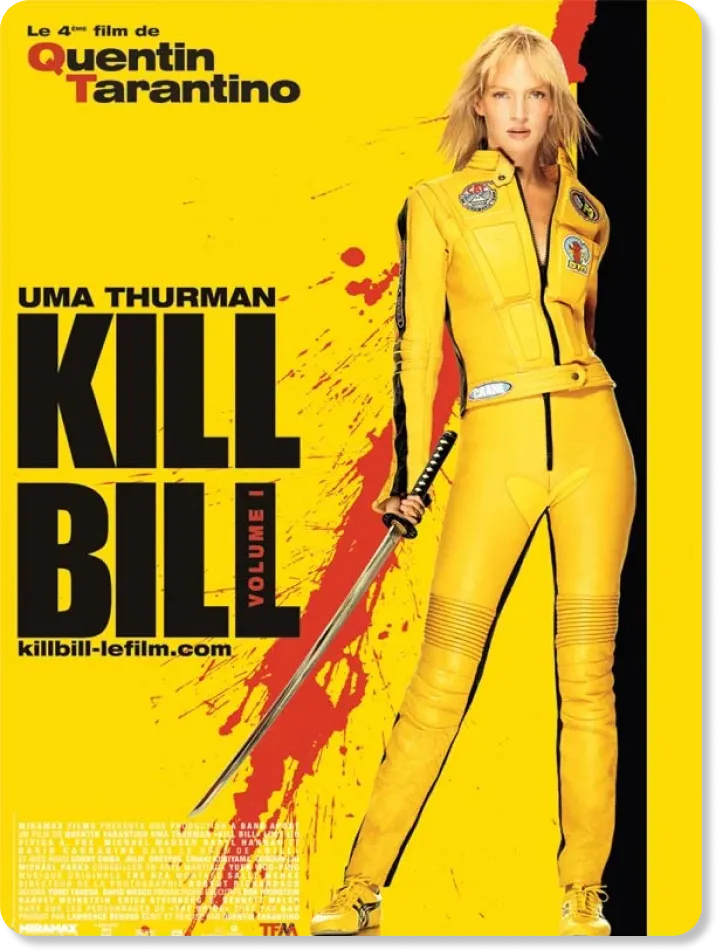
In the movie, the katana is more than just a weapon; it is a symbol of justice and power. Beatrix uses her sword with precision reminiscent of the rigorous training of samurai.
Tarantino manages to use the katana as an extension of the character, reflecting Beatrix's quest to restore her honor.
The movie draws heavily from Japanese cinema, particularly samurai films, blending traditional Eastern elements with Tarantino's modern and violent style.

The influence of the katana in Kill Bill has been significant in Western popular culture. Before the movie, the katana was mainly associated with martial arts films, but Tarantino popularized it beyond this framework.
Beatrix, a woman using a traditionally masculine weapon, reinforces the katana as a symbol of power, while adding modernity to this historical object.
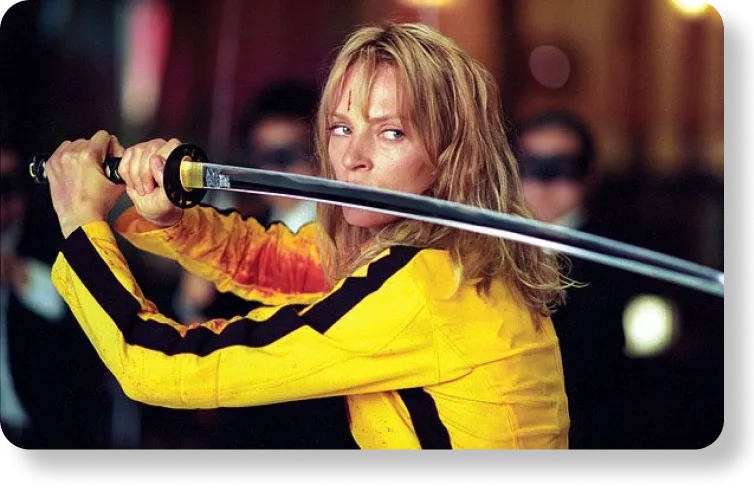
Visually, the movie incorporates elements of classic Japanese cinema, with choreographed fights reminiscent of samurai duels.
The katana, in this context, becomes more than just a combat tool; it symbolizes mastery over destiny and the ability to seek revenge. This use of the katana in a modern movie shows how this object has transcended time while remaining true to its original symbolism.
Kill Bill proves that the katana can evolve in contemporary culture while maintaining its historical and cultural dimension.
It perfectly illustrates the future of the katana, showing that this object can continue to evolve, be reinterpreted, and retain its importance, even in a technological future.
Discover how Quentin Tarantino reinterpreted the katana in Kill Bill, blending his modern vision with Japanese culture.